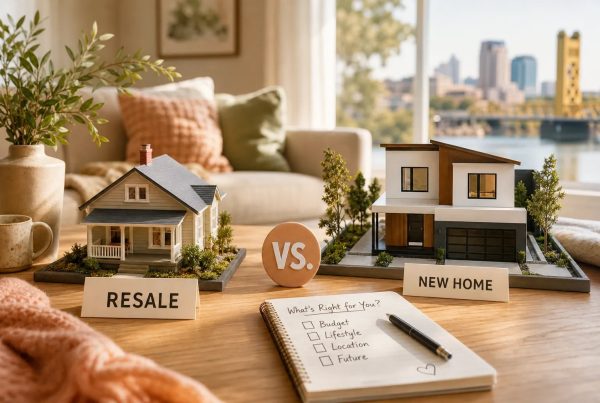
So, what should you watch out for when buying a new construction home? The five biggest risks are upgrade cost inflation, builder contract fine print, construction delays, warranty limitations, and skipping an independent inspection. Many buyers walk into a model home assuming the process will feel simpler than a resale purchase. It is not. Builder contracts are drafted by the builder’s legal team, advertised prices rarely reflect the final number, and construction timelines are often treated as suggestions rather than commitments. Understanding each of these risk areas before you sign anything puts you in a fundamentally different position than the buyer who discovers them at closing.
Every one of these risks has a practical remedy. This article covers them one by one so you can run your own new build checklist, ask the right questions to ask a home builder, and walk into any builder’s sales office with clear eyes.
Key takeaways
- Base price gap: The advertised price is a starting point; upgrades alone can add 8%–15% to the base price of a new construction home in California, according to Buildermuse (2026 planning benchmark).
- Contract protections: Builder contracts favor the builder; insist on financing, appraisal, inspection, and outside-date contingencies before signing anything.
- Delay planning: Most new builds experience some delay; add at least one to two months of buffer to the builder’s promised completion date as a planning recommendation based on industry ranges.
- Warranty limits: The standard 1-2-10 builder warranty has real exclusions; read the actual warranty document before closing, not after.
- Independent inspection: Municipal inspections primarily confirm code compliance and generally do not assess craftsmanship or verify contracted selections, independent inspections are needed for those protections.
- Representation matters: The builder’s sales agent works for the builder; having a specialized advocate in the room changes the terms you get and the mistakes you avoid.
What should I watch out for when buying a new construction home: the advertised price
The model home is a sales tool, not a representation of the base price. Everything that makes it look finished, upgraded countertops, wide-plank flooring, recessed lighting, built-in cabinetry, is typically a paid upgrade on top of the advertised starting number. Builders stage model homes with premium selections precisely because that is what moves buyers emotionally, and that emotional investment makes it psychologically harder to say no to the upgrade table afterward.
In California, upgrades alone routinely add 8%–15% to the base construction cost, according to Buildermuse (2026 planning benchmark). Modest selections, limited flooring or countertop swaps, typically land closer to 5%–8%. Extensive structural modifications, premium kitchens, or high-end window packages can push that figure to 15%–25% or higher.
What the base price often leaves out entirely is a longer list than most buyers expect. Lot premiums for cul-de-sac, corner, or view positions; sod, irrigation, fencing, and exterior walkways; appliances; window treatments; and sometimes even overhead light fixtures can all be separate line items. Site preparation charges, grading, soil testing, utility connections, and permit fees may also be passed directly to the buyer. Before you sign anything, request a line-by-line specification sheet and an all-in price that covers every selection, lot premium, HOA initiation fee, and estimated property tax. That document is the only number that actually matters.
What builder contract clauses catch buyers off guard?
Price escalation clauses allow the builder to pass material or labor cost increases to the buyer with limited notice and no price cap, unless you negotiate one in writing. Material substitution language can allow the builder to swap specified finishes for lower-quality alternatives without your written approval. Mandatory arbitration clauses, common in builder contracts, limit where and how you can seek remedies if something goes wrong after closing. These are the clauses builders do not highlight during the signing appointment, and they are the ones real estate attorneys flag most consistently as buyer-unfriendly.
Certain contingencies are non-negotiable, and buyers should never casually waive them. Final financing approval (not just preapproval), a satisfactory appraisal contingency, and independent inspection rights at multiple build stages are foundational protections. An outside completion date with a deposit-refund trigger is equally critical; without one, your money can sit tied up in an indefinitely delayed project with no exit. HOA document review, clear title, certificate of occupancy, and verification that every advertised incentive is in writing round out the core protections every buyer needs before signing.
What should I watch out for when buying a new construction home: contract clauses
The most dangerous combination in any builder contract is a vague delivery date paired with no financing or appraisal contingency and a nonrefundable deposit. That combination hands all the leverage to the builder. Have a local real estate attorney compare the contract with the plans, the options sheet, and any marketing materials before you sign. If a builder representative made a verbal promise, attach it to the contract as a written addendum, otherwise, treat it as if it does not exist.
How common are construction delays, and what can you actually do about them?
Construction delays are common. Industry data puts delayed new residential projects at roughly 75% overall, and new residential builds in Northern California face the full range of contributing factors: permit backlogs, subcontractor scheduling gaps, material lead times, inspection queues, and weather. For a typical to-be-built home in Northern California, a reasonable planning estimate is 6–8 months from permit to closing under normal conditions, with a 2–8 week delay range on top of that for most projects.
Builder contracts routinely include a grace period, often 30–90 days, during which you have no cancellation right and no compensation, even if the home is nowhere near finished. Without a firm outside date in the contract, you can find yourself in a holding pattern while extra rent, storage costs, and rate-lock extension fees accumulate. That is not a hypothetical scenario; it is a standard risk for buyers who sign the builder’s form contract without negotiation.
A well-negotiated contract includes an outside closing date with a deposit-refund right if the builder misses it, plus narrowly defined force majeure language that excludes foreseeable supply issues and poor planning. If you are facing a delay, give written notice, preserve records of every additional expense you incur, and avoid signing extension agreements without understanding how the new date affects your existing rights. Add at least one to two months of buffer to the builder’s promised completion date when planning temporary housing and storage.
Do builder warranties really protect you the way you think?
The standard new-home warranty follows a 1-2-10 structure: roughly one year for workmanship and materials, roughly two years for major mechanical systems like HVAC, plumbing, and electrical, and up to ten years for structural defects in load-bearing components, according to the Federal Trade Commission. That coverage sounds comprehensive, but the exclusions are where most disputes actually happen.
Normal settling, small drywall cracks, cosmetic shrinkage, and weather-related damage are commonly excluded. Damage caused by maintenance choices, by contractors you hire after closing, or by failure to report a defect within the stated claim window can void coverage entirely. Appliances and consumer equipment are almost always excluded from builder warranty coverage; they carry separate manufacturer warranties. The written warranty, not what the sales team describes verbally, is what controls in every dispute.
Read the warranty document before closing, not after. Understand the claim deadlines, response timelines, and whether the warranty transfers if you sell the home. The key distinction the warranty makes is between a defect in original construction, which may be covered, and damage caused by maintenance, weather, aging, or later alterations, which usually is not. That line determines the outcome of most warranty claims, and buyers who have not read the document are rarely prepared to argue it effectively.
Independent inspections on a new build are non-negotiable
Municipal inspections primarily confirm code compliance and generally do not assess craftsmanship, verify that your contracted selections were actually installed, or catch defects that fall outside code scope. A pre-drywall inspection, which typically costs $100–$600 depending on home size and market, according to Angi, can flag framing issues, improperly routed plumbing or electrical, insulation gaps, and water-intrusion risks before they are sealed behind walls. Problems found at that stage cost a fraction of what they cost once drywall is up.
A second independent inspection at substantial completion protects you before the final punch list walkthrough and before any leverage to demand repairs disappears at closing. During the final walkthrough, test every outlet, faucet, appliance, door, window, light switch, HVAC mode, and exterior drainage point. Document every issue with photos, item numbers, and room locations. Use blue tape to mark visible defects in the home, and make sure every taped item appears in a written list the builder acknowledges in writing.
Significant issues, specifically electrical, plumbing, structural, water intrusion, and safety items, should be corrected before closing. Back everything else with a signed repair agreement that includes a deadline, not a verbal promise. A builder who resists independent inspections at key build stages is sending a red flag worth taking seriously before you go further.
Who’s actually in your corner when you’re buying from a builder?
The on-site sales agent in the model home is employed by the builder. Their job is to close transactions at the builder’s terms, and they are not legally or ethically required to point out contract clauses that disadvantage you, flag upgrade pricing with margin built in, or tell you that a competing lot might be a better fit. Buyers who walk in without their own representation are negotiating without full information, and many do not realize this until they are already under contract.
At Next Real Estate Group (ERA Powered), our agents have guided buyers through 8,000+ new homes sold across Northern California. We work with buyers on both new construction and resale purchases. We start every conversation with a simple question: “Tell us how you want to live.” From there, everything, builder selection, lot position, upgrade priorities, contract review, and inspection coordination, is built around what the home means to you.
Go in with your eyes open
The buyer who goes in without understanding how builder pricing, contracts, delays, and warranties actually work is at a real disadvantage from the moment they walk through the model home door. Knowing what to watch out for when buying a new construction home is not just useful knowledge, it is the difference between a smooth closing and an expensive lesson.
Use this article as your new build checklist before you sign anything. Get every commitment in writing. Hire an independent inspector at the pre-drywall stage and again at substantial completion. Read the warranty document before closing. And make sure someone who has done this hundreds of times is in the room with you when it matters most.
If you are exploring new construction in the Sacramento region or anywhere in Northern California, reach out to our team at Next Real Estate Group. We are ready to help you navigate builder contracts, evaluate communities, and protect your interests every step of the way. Serving Sacramento and Northern California, contact us today to get started.
Frequently Asked Questions
How much should we budget for upgrades on a new construction home?
Expect upgrades to add meaningfully to the base price; in California, upgrades routinely add about 8%–15% to the base construction cost. Modest selections typically land closer to 5%–8%, while extensive structural changes or high-end packages can push that figure toward 15%–25% or higher, and lot premiums, site work, appliances, and other line items are often charged separately.
Can we rely on verbal promises made by the builder’s sales agent?
No, treat verbal promises as if they do not exist unless they are attached to the contract as a written addendum. Builder contracts are controlled by the written documents, so any oral commitment should be documented in writing before you sign.
Are municipal inspections sufficient, or do we need independent inspections too?
Municipal inspections primarily confirm code compliance and generally do not assess craftsmanship or verify that contracted selections were installed, so they are not sufficient on their own. Hire independent inspections at key stages, pre-drywall and at substantial completion, to catch framing, plumbing, electrical, insulation, water-intrusion risks, and to protect your leverage before closing.
What contract protections should we make sure are included before signing?
Insist on final financing approval, an appraisal contingency, independent inspection rights at multiple build stages, an outside completion date with a deposit-refund trigger, HOA document review, clear title, certificate of occupancy, and written verification of any advertised incentives. Also watch for price escalation, material substitution, and mandatory arbitration language, and have any verbal promises added as written contract addenda.